Crown Reduction
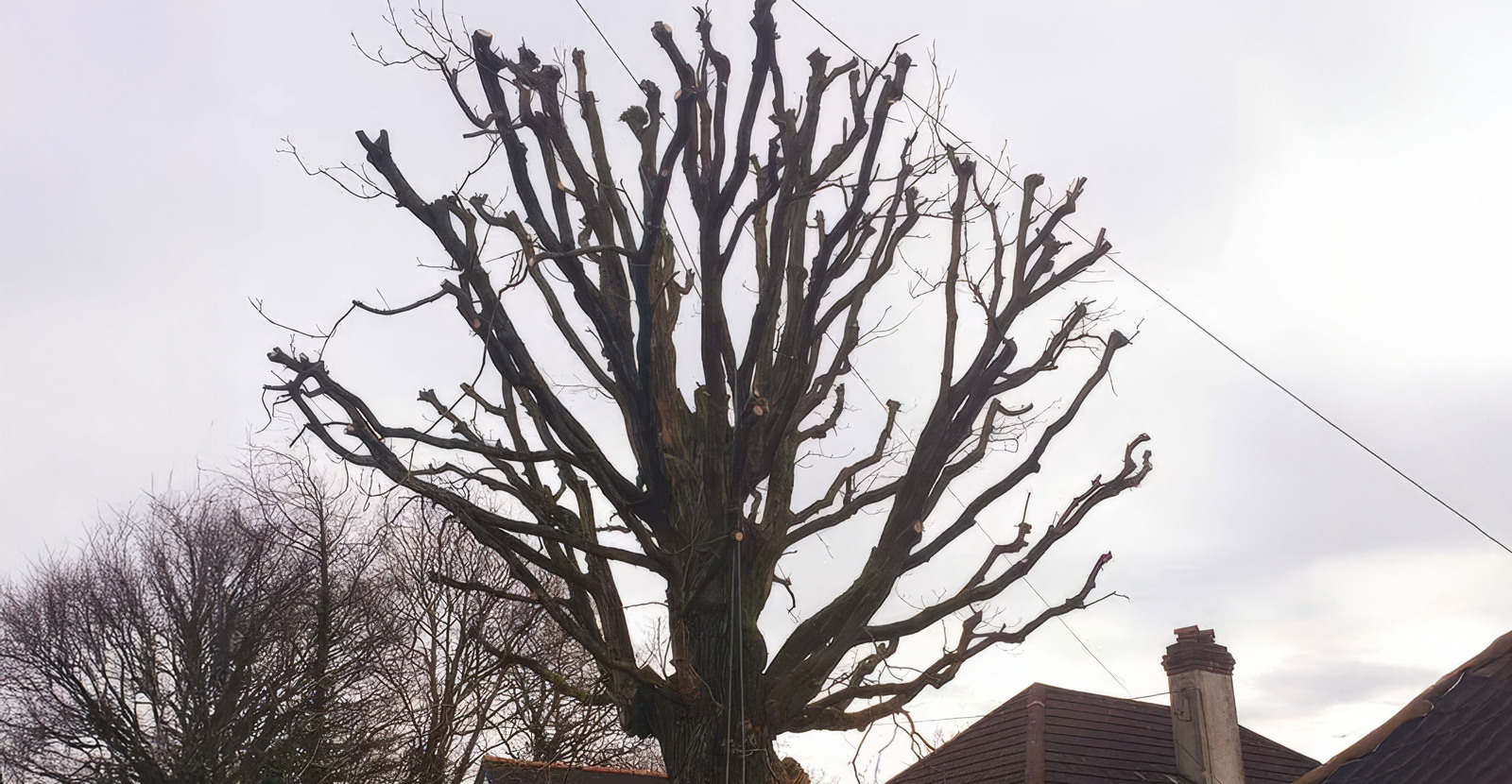
Original Tree
Crown reduction is a tree maintenance technique often employed by skilled tree surgeons to enhance a tree's health, appearance, and safety. This process involves carefully trimming the outer branches of the tree's canopy to reduce its overall size while preserving its natural shape and structure. Crown reduction is beneficial for trees that have grown too large for their environment, potentially causing safety risks or obstructing nearby structures, roads, or power lines.
One of the main benefits of crown reduction is relieving stress on a tree's limbs and trunk. By lightening the overall weight of the canopy, the likelihood of branches breaking under their own weight or during storms is significantly decreased. This makes crown reduction a vital safety measure in areas prone to high winds or severe weather. Additionally, the process encourages new, healthy growth by removing dead, diseased, or overcrowded branches, which can help increase the tree's lifespan.
Another key advantage is the improved balance between the tree and its surroundings. Crown reduction can prevent a tree from encroaching on neighbouring properties, blocking sunlight, or interfering with infrastructure. By managing its size and shape, the tree remains an asset to its environment without becoming a liability.
Aesthetically, crown reduction ensures the tree maintains a harmonious and proportional appearance, enhancing the visual appeal of gardens, parks, and urban areas. In essence, this practice promotes safety, longevity, and beauty while ensuring a sustainable relationship between trees and their environments.